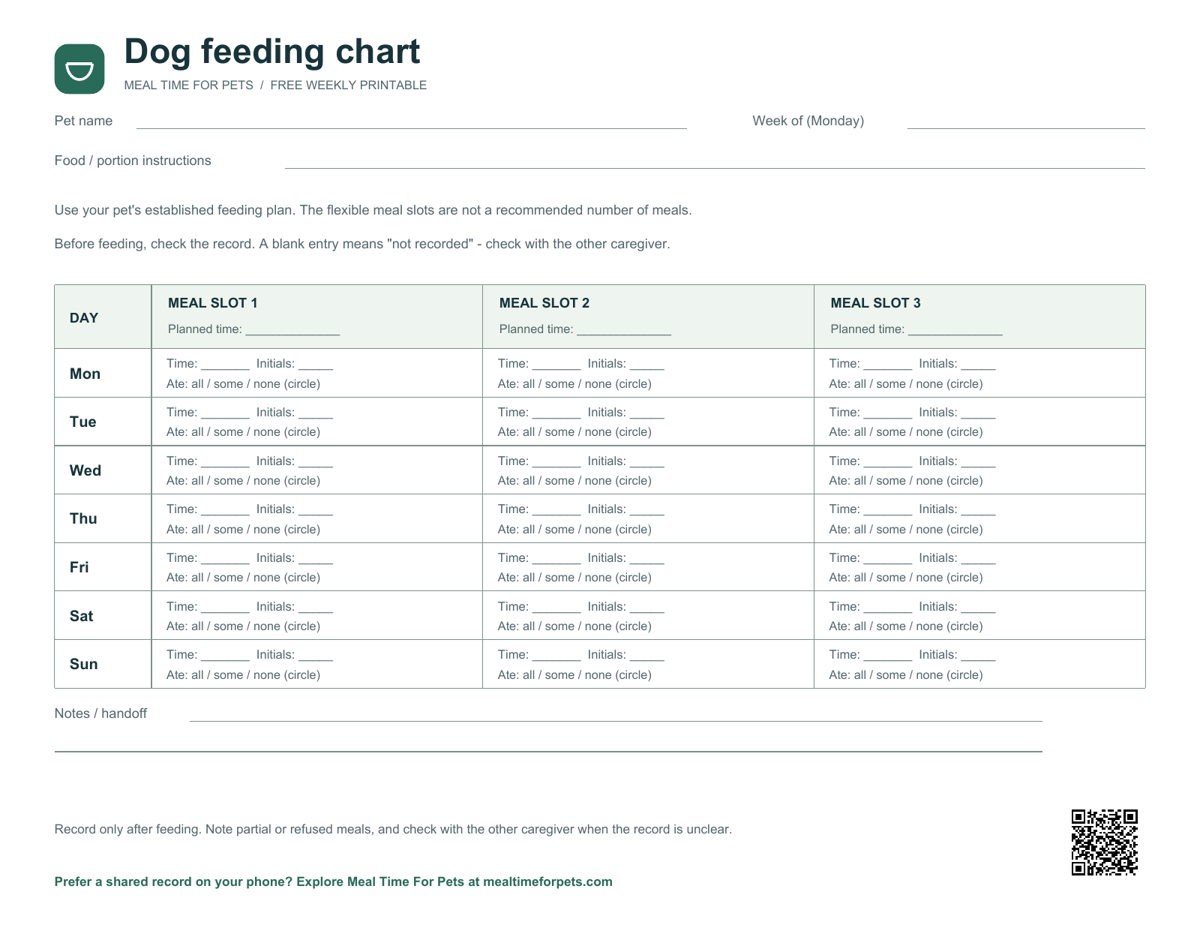
A free weekly dog feeding chart for the fridge, the food cupboard, or the person taking the next shift. Write the routine once. Record the meal after it happens.
✓One pet. One current plan. Room for what actually happened.
A full bowl is easy. A clear handoff takes a record.
When two people share dog care, a reminder is only half the story. One person remembers breakfast. The next person needs to know whether breakfast actually happened. This chart keeps the plan and the record together, without another message in the group chat.
Ready for the fridge
Your free dog feeding chart.
Choose your paper size. Print in landscape at actual size, or use your printer’s fit-to-page setting.
A seven-day meal log with three flexible meal slots
Space for the food, planned portion and usual time
Actual feeding time, caregiver initials and meal notes
Free to print and share with your caregivers. No email or app account required.
Make the record a habit
A simple way to use your chart.
Write the plan
Add your dog’s name, the week, food and planned portions. Use the feeding plan you already follow; this chart does not calculate portions.
Put it where feeding happens
Keep one current copy beside the food. Agree which initials each caregiver will use, and retire the previous week’s chart.
Log after the meal
Write the actual time and your initials after feeding. If your dog ate only some food, refused the meal, or the plan changed, leave a short note.
A dog feeding chart that works for more than one person
Before filling the bowl, check the relevant day and meal slot. A blank box means no one has recorded the meal; it is a reason to check with the other caregiver, not proof your dog has not eaten. Keeping the chart in one place makes that check easy.
Make the portion instruction specific
Write the food name and the exact measuring unit you use, rather than “one scoop.” Portion needs vary with the dog, food and life stage. Follow your veterinarian’s advice and the food’s feeding guidance, and update the written plan when that advice changes.
Keep a useful week of history
Use a separate sheet for each dog. Keep short notes about unfinished meals or a handoff to a sitter. Bring concerns about appetite or changes in eating to your veterinarian; a completed chart is a record, not a diagnosis.
For veterinary guidance: ASPCA: Dog Nutrition Tips. This printable organizes an existing care plan; it does not prescribe food amounts or medication.
When the record needs to travel
The fridge has the chart. Your phone can have the routine.
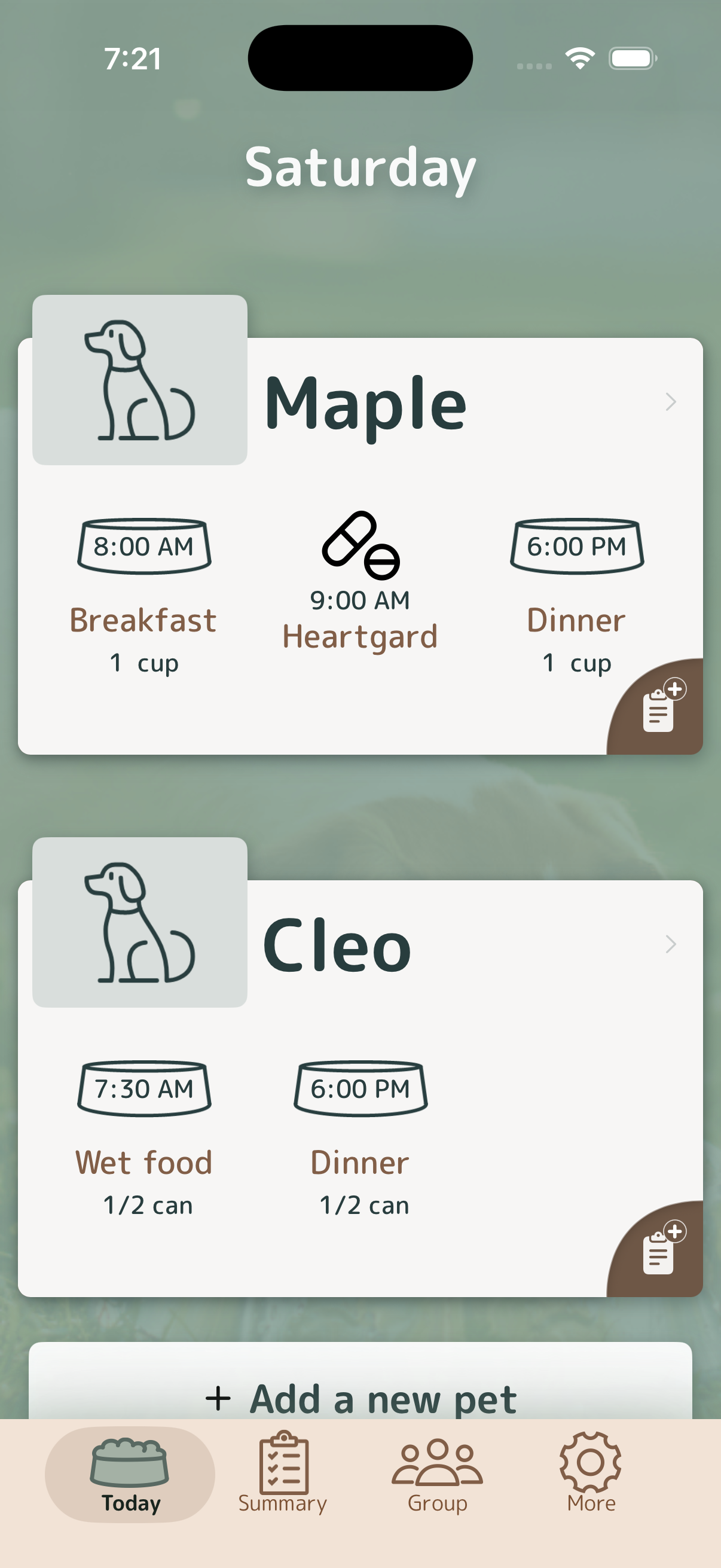
Keep meals, medicine, reminders and care history together in Meal Time For Pets. Log care when it happens, then check the record before the next handoff.